Pendulum Motion Lab
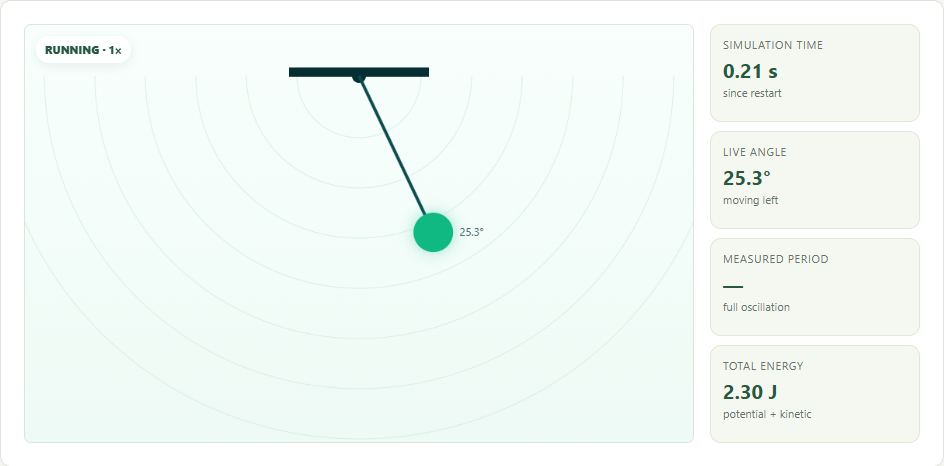
Compare an ideal prediction with nonlinear motion. Change one variable, record a trial, and follow the evidence.
01 / Physics
Move a charge. Release a pendulum. Trace a ray. These experiments make the relationship between a model and its behavior easier to see.
8 projects
Compare an ideal prediction with nonlinear motion. Change one variable, record a trial, and follow the evidence.
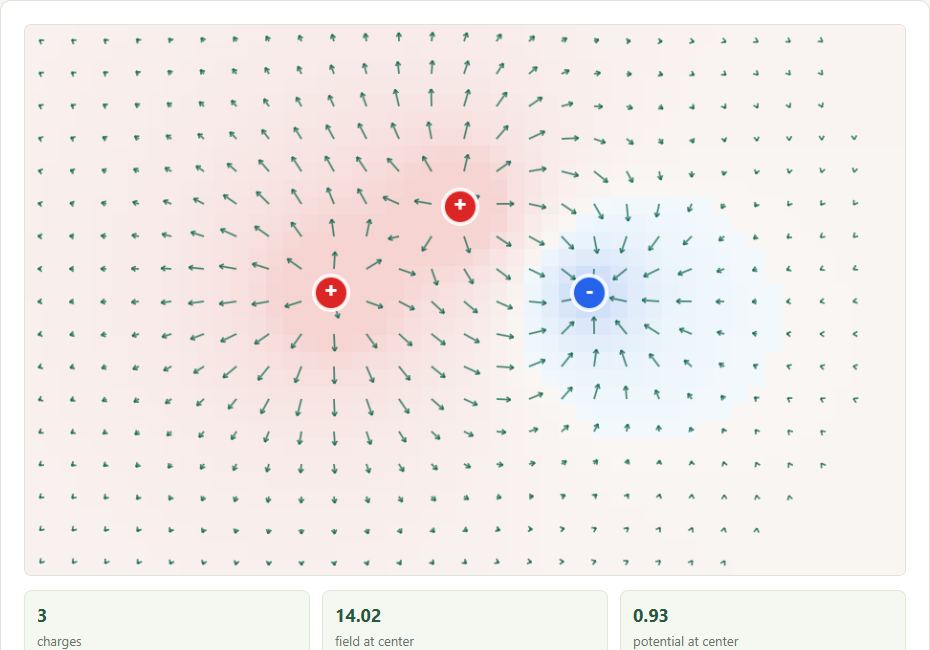
Arrange positive and negative charges, then read the field as a pattern of direction, strength, and potential.
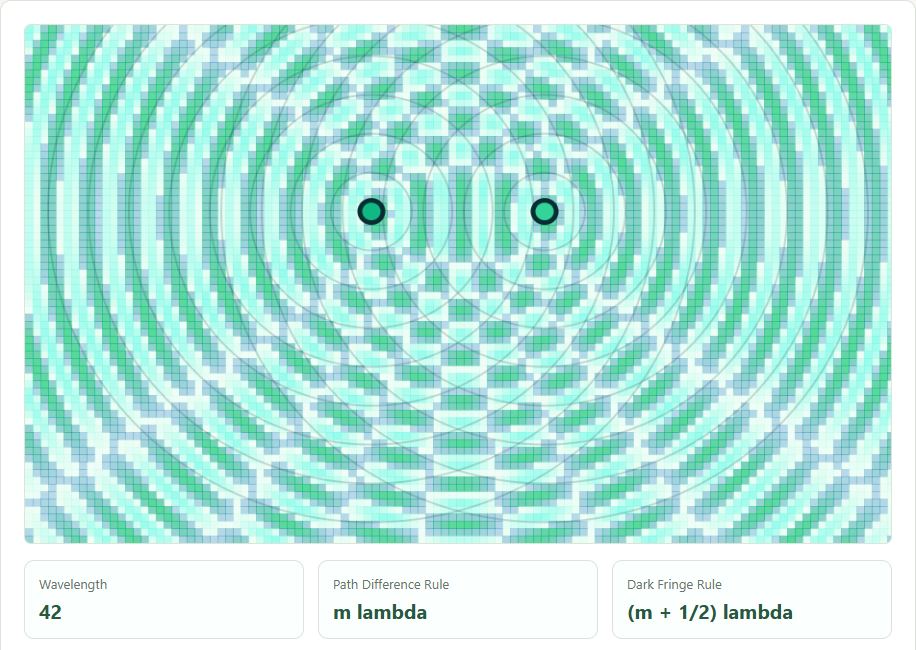
Bring two sources together and discover how phase, spacing, and wavelength reshape an interference pattern.
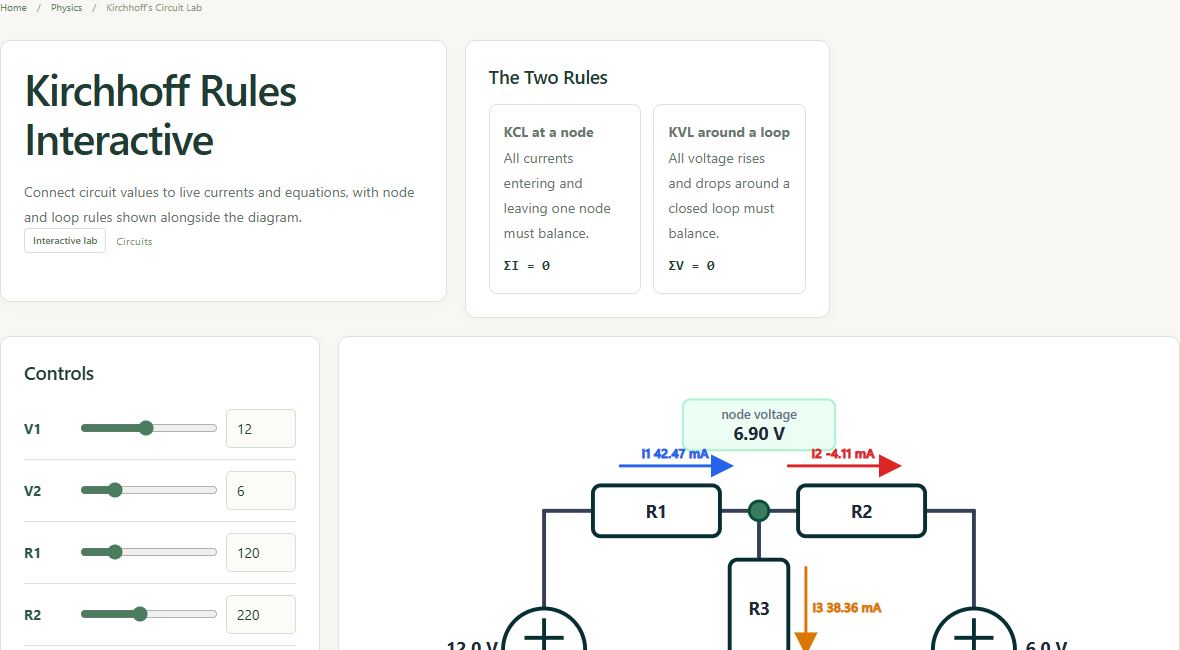
Connect circuit values to live currents and equations, with node and loop rules shown alongside the diagram.
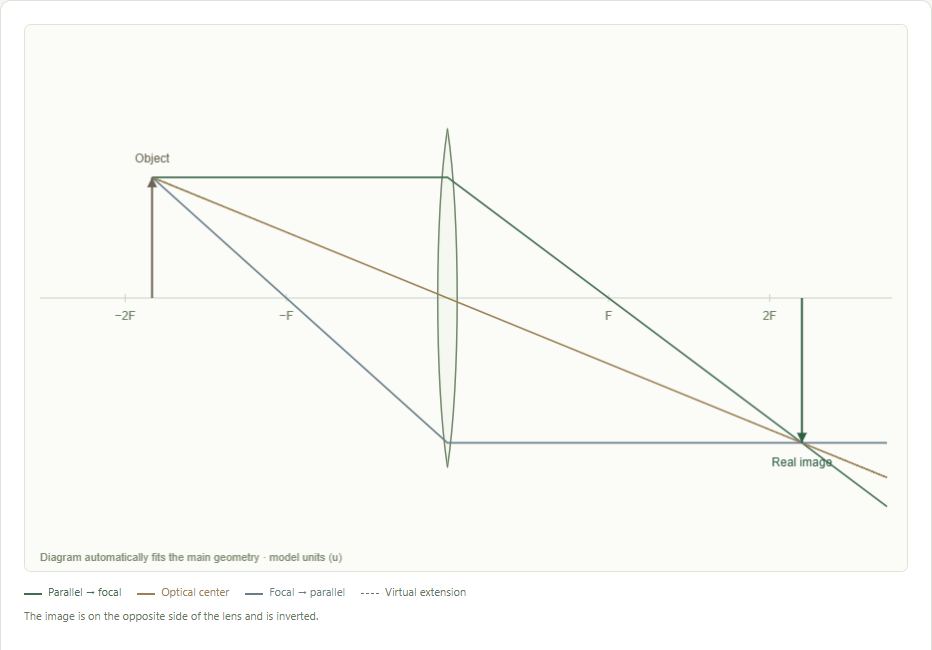
Trace principal rays through a convex lens and connect object position to image distance, orientation, and scale.
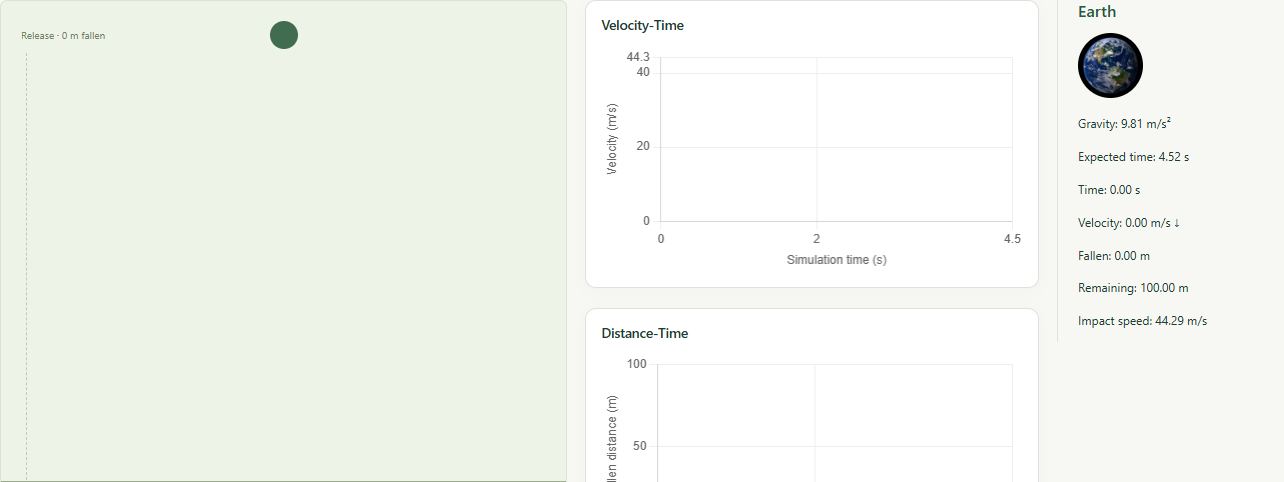
Take the same drop to different worlds and compare motion, velocity, and acceleration under each gravity.
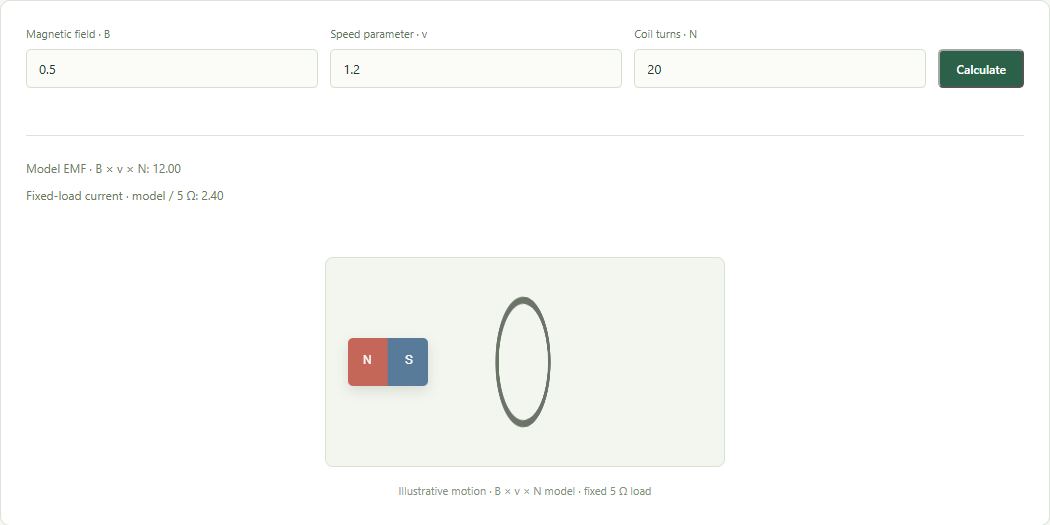
Explore a moving magnet and a compact B × v × N calculation, with the demonstration’s assumptions made explicit.
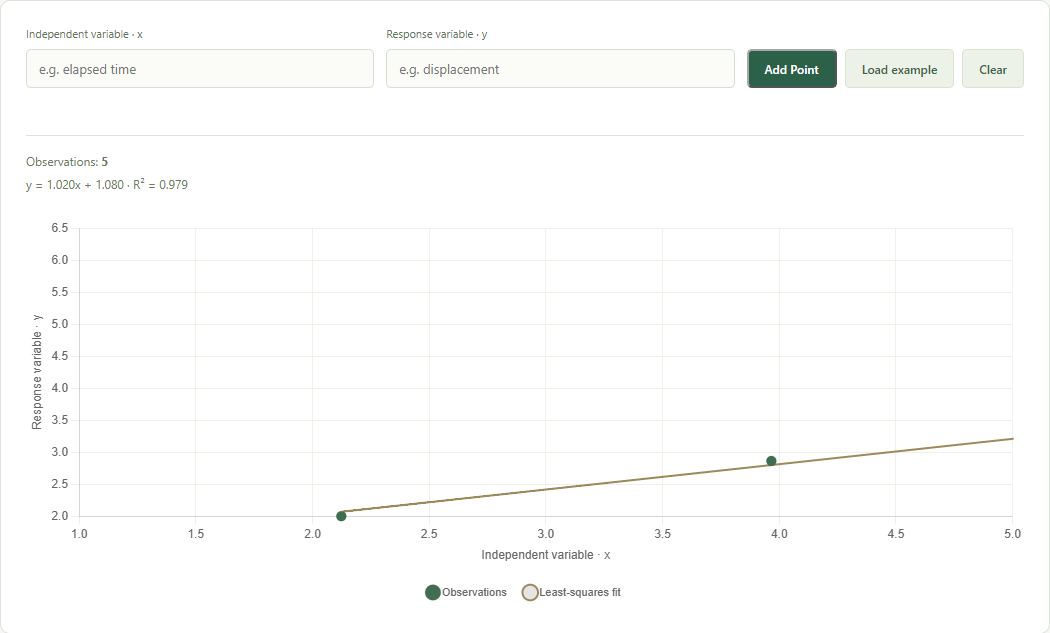
Turn measured pairs into a scatter plot, fit a straight line, and inspect the relationship behind the coefficients.
No projects match that combination.
Interactive models for exploring ideas—not substitutes for laboratory measurements.